Stereochron Island manifesto
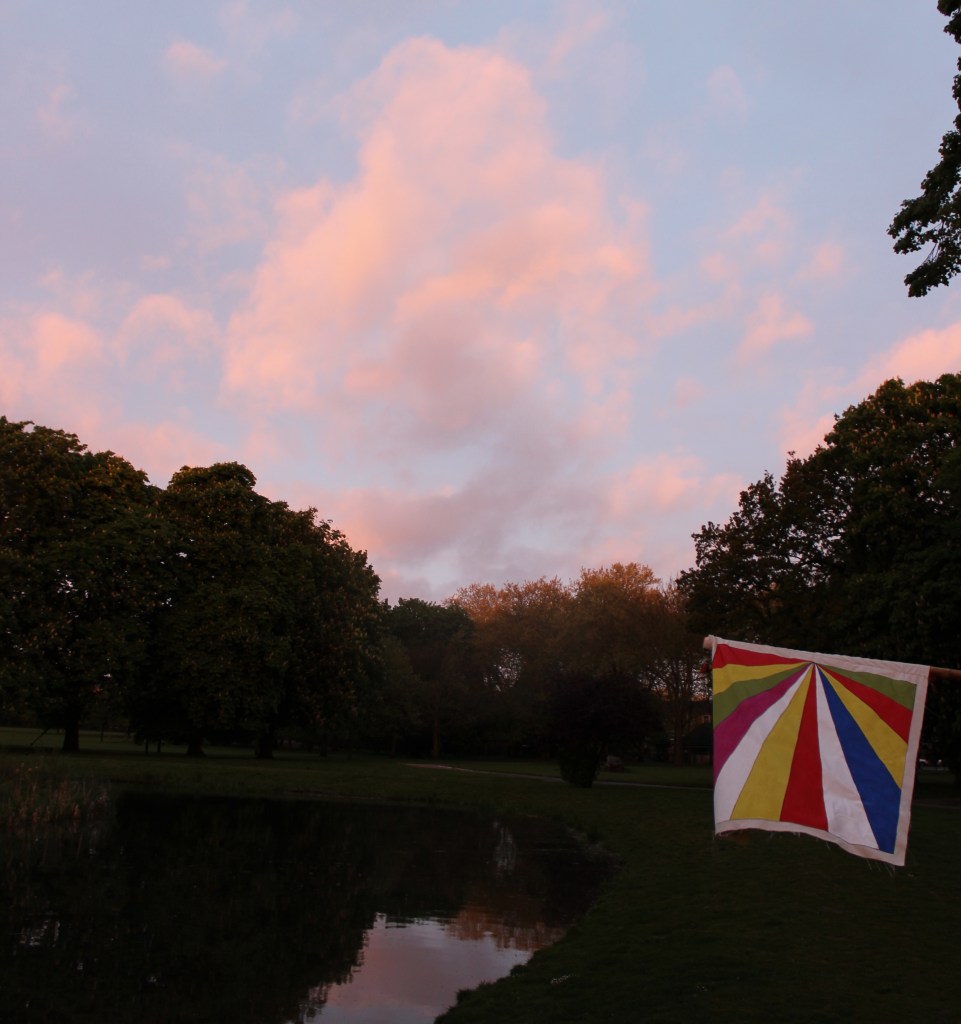
This is a (revised) extract from the manifesto for Stereochron Island, my project as artist in residence in Victoria Park for Chisenhale Gallery in 2013-14. The project playfully imagined that the East London park was a tiny territory campaigning to be officially recognised as a state without clocks. First we embarked on a phase of research and experiment on the island to test our new model of multi-sensory timetelling. And then, as Campaign Secretary, I presented our manifesto.
_
WE BELIEVE THAT TO UNFETTER TIME, WE MUST FETTER THE CLOCK
Out there in the Monochronic states, we force ourselves to match the unrelenting, unchanging beat of the clock.
On Stereochron Island we think of the clock’s hour hand as a solidified sun shadow severed from its source. We demand that this idealised, abstract, rigid form be anchored back into the unruly matter of life.
On Stereochron we have returned to marking time by the relationship of our tiny boot-shaped portion of Earth to the Sun. By doing this, we have begun to see how we are tied to the Sun. Its shifting rays pull us through time, immersing us in the flux of life. At night the star clock brings us another sense of time entirely.
WE WILL BUILD A RICHER LANGUAGE OF TIME
A core initiative of our campaign is to expand and refine the Island’s word-stock for time. This is so we can lay description and detail over the blunt and contentless language of hours, minutes and seconds.
To that end we have done away with chilling abstractions like ‘deadline’. In place of such terms, we have embraced a new vocabulary that includes:
Zugunruhe – the German word for the internal restlessness that tugs at birds to migrate to their breeding or wintering grounds.
Gökotta – the Swedish practice of making an early-morning outing to revel in birdsong.
Hanami – the Japanese custom of celebrating the fleeting cherry and plum blossom in spring.
Gibbous – an English word derived from the Latin for hunchback. It describes the bulbous appearance of the Moon in when it isn’t full but more than half of its face is lit.
Photo by Emma Ridgway.
 Cathy Haynes